Designing a West-Facing Flat in Hyderabad: Light, Seasons and Vastu
A west-facing Hyderabad flat gets the day's strongest, warmest light. Designed for the sun, the air and the seasons, that light becomes the best thing about the home.
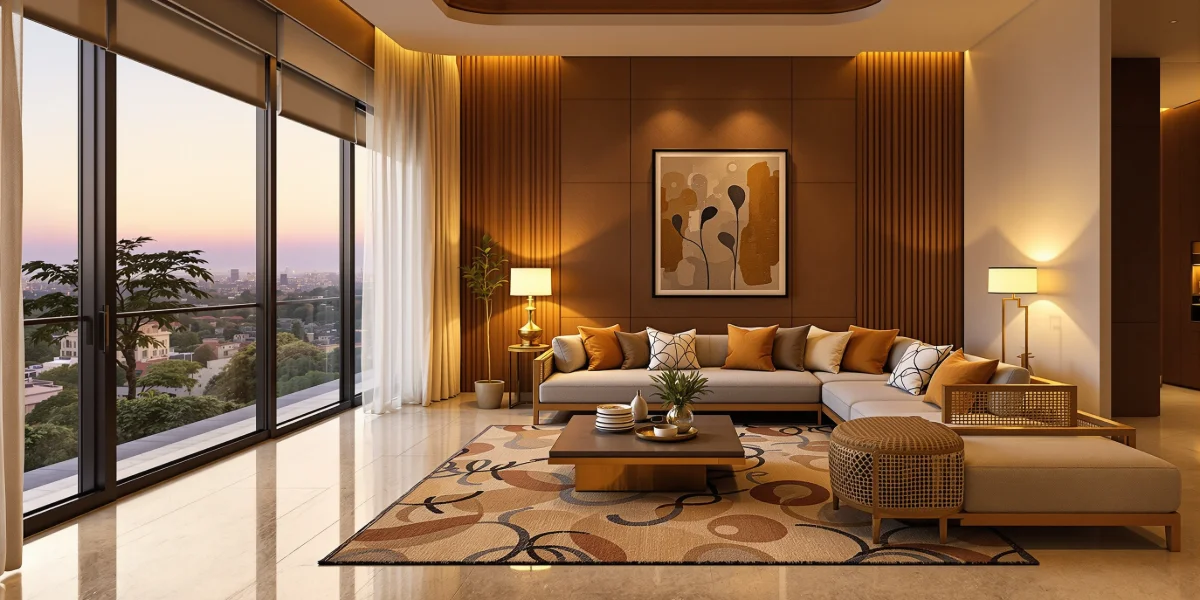
By five in the afternoon, a west-facing flat in Hyderabad fills with the strongest, warmest light of the day. It arrives low and long, turns wood and stone golden, and lingers for a full, generous hour before the sky lets go. It also comes with real heat. Between the two lies the whole opportunity: a west-facing home, designed for its light and its air, is one of the most alive spaces you can live in.
Much of what people look up under west facing house vastu is really this question in disguise: how do I live well in a home that meets the afternoon sun? This is a design guide to exactly that, for the fixed plan of a Hyderabad flat, where the answers sit in the windows, the materials, the light and the air, with vaastu kept as one considered input rather than a verdict.
What Designing a West-Facing Flat Involves

West facing house vastu is a traditional way of thinking about a home that meets the afternoon sun. Whether a direction is auspicious is a personal view for the homeowner to hold. What is certain, and entirely designable, is the strong late-day light: how you shade it, which materials take it well, how the air moves through the flat, and how the evening becomes the room's best hour.
In a flat you cannot move a wall or re-plan the kitchen, so the design lives in the choices that stay yours. Treat the light as the material you are working with, plan for the way it changes across the day and the seasons, and a west-facing flat stops being a thing to manage and becomes the reason the home feels the way it does.
Read the Light and Air, Through the Day and the Seasons

Good design for a west-facing home starts with reading its conditions honestly, because they change more than most rooms. The morning is soft and indirect, a calm north-and-east borrowed light. Midday is bright and even. Then, between about three and six, the western sun drops low and comes at the window almost level, reaching deep into the room. Finally the long, low evening light arrives, the warmest and most flattering hour the home will get.
The seasons shift this again. In the Hyderabad summer that afternoon sun is fierce and the flat needs shade and air. In the monsoon the light turns soft and grey and the air turns humid, so the room wants to stay bright and dry. In winter the same western sun is gentle and welcome, a warmth you actually want to let in. A design that only solves for peak summer fails half the year. The good ones flex.
Many Hyderabad homeowners want their home to sit in harmony with vaastu, and a west-facing flat can absolutely be designed that way.
Shade and Soften the Sun, Season to Season

In an independent house you can add a deep veranda, a thick wall, or even move or resize a window. In a flat the windows sit where the builder placed them, so you work at the glass itself, and the single most useful move is to treat the window as more than a single layer.
Layer it. A light, gauzy sheer sits closest to the glass and diffuses the direct sun into a soft, even glow, so the room stays bright without the dazzle. Behind it, a heavier drape or a solar shade lets you close the light down on the harshest afternoons. That adjustability is the whole point, and it is what carries the design across the seasons: draw both against the June sun, open the drape to gather the mild December warmth, keep the sheer working on a grey monsoon day. Where you can, add a good-quality solar-control film on the glass to cut heat and ultraviolet light before it enters, and a deeper reveal or a pelmet to shade the pane from above.
Materials and a Palette That Work Across the Year

Strong western light is unkind to thin, flat finishes and generous to honest, textured ones. This is where a west-facing flat can quietly become more beautiful than a shaded one, because the same low sun that brings the heat also makes good materials glow.
Reach for surfaces with body and breath. Lime-plastered walls, cane, undyed linen, pale wood and natural stone stay cool to the touch in summer, handle the monsoon humidity without warping or growing tired, and deepen rather than bleach under a low sun. They also hold their colour, which matters in a room that sees a lot of direct light across the year. Keep the walls in soft, light-reflecting tones so the room feels cool and open through the afternoon, and carry a little real depth on the surfaces away from the direct beam, so the space never looks washed out at its brightest.
Designing in Harmony With Vaastu

Many Hyderabad homeowners want their home to sit in harmony with vaastu, and a west-facing flat can absolutely be designed that way. Here it helps to be honest about what a flat allows: the plan is fixed, so vaastu in a flat is less about re-placing the kitchen or the bedroom and more about the choices you can still make.
Those choices are gentle and, happily, they line up with good design for the light anyway. Keep the main entrance clear, well-lit and welcoming. Favour soft, light-reflecting colours through the shared spaces. Protect the natural light and cross-ventilation a west flat usually has in plenty, which vaastu values as much as comfort does. Place the pooja corner in a calm, clean spot away from the wet areas, and let the heavier, restful uses settle toward the quieter side of the home. If your flat is described as north-west or south-west facing rather than due west, treat that as a hint about which side catches the most late sun, and design the shading and materials there a little more firmly. Nilaya designs to whatever framework a homeowner brings; the role is to make the home beautiful and comfortable within it.
Let the Evening Light Become the Room's Best Hour

Everything so far has been about handling the difficult part of the west sun. This last part is about using the best part, because once the heat and glare are managed, what remains is the finest light any room in the home will get.
The long, low evening light turns wood amber, catches the weave of cane and linen, and stretches soft shadows across the floor. Arrange the seating you use in the evening within reach of it rather than away from it, and keep the sheer working so the sun reads as a glow rather than a glare. Then plan for the moment it goes: a west room can drop from glorious to dim quickly at sunset, so a low, warm layer of lamps, on a gentle colour temperature and ideally on a dimmer, hands the room from daylight to lamplight without a hard edge. Designed this way, a west-facing flat does not merely cope with its light. It has the best evening in the building, every day of the year.
Sources & References
- Vaastu Shastra: The traditional Indian system of architecture and its treatment of orientation and the directions. Vastu shastra, Wikipedia.
- Solar heat gain: How sunlight entering through glazing becomes heat inside a room, and why orientation and shading matter. Solar gain, Wikipedia.
- Sun path and orientation: Why a west-facing facade receives low, direct sun in the late afternoon. Sun path, Wikipedia.
Frequently Asked Questions
- Is a west-facing flat good or bad?
- That is a personal, and for many a vaastu, question, and it is yours to decide. From a design standpoint it is simply a home that meets the afternoon sun, which is entirely designable. Handled well, that light becomes the home's best feature.
- What are the benefits of a west-facing flat?
- Long, warm evening light that flatters materials and gathering spaces, bright afternoons, and in a flat usually good ventilation. Designed with the sun rather than against it, the evening light becomes the home's signature.
- Is a north-west or south-west facing flat different from a west-facing one?
- The design principles are the same. The label simply tells you which side catches the most late sun, so you concentrate the shading, the solar film and the more robust materials on that side.
- Which colour is best for a west-facing home?
- Soft, light-reflecting tones on the main walls keep the room cool and open, with a little depth carried on surfaces and materials away from the direct beam so the space does not look washed out at its brightest.
- Where should the main door of a west-facing house be?
- Vaastu often favours the entrance towards the north-west portion of the west side, but in a flat the door is already placed. Keeping it clean, bright and welcoming matters far more than its exact position.