What Makes a Bedroom Feel Calm at 10pm
The small decisions that turn a first-home bedroom into a place where the day actually ends. Curtain weight, floor lamps, cotton throws, and what to leave out.
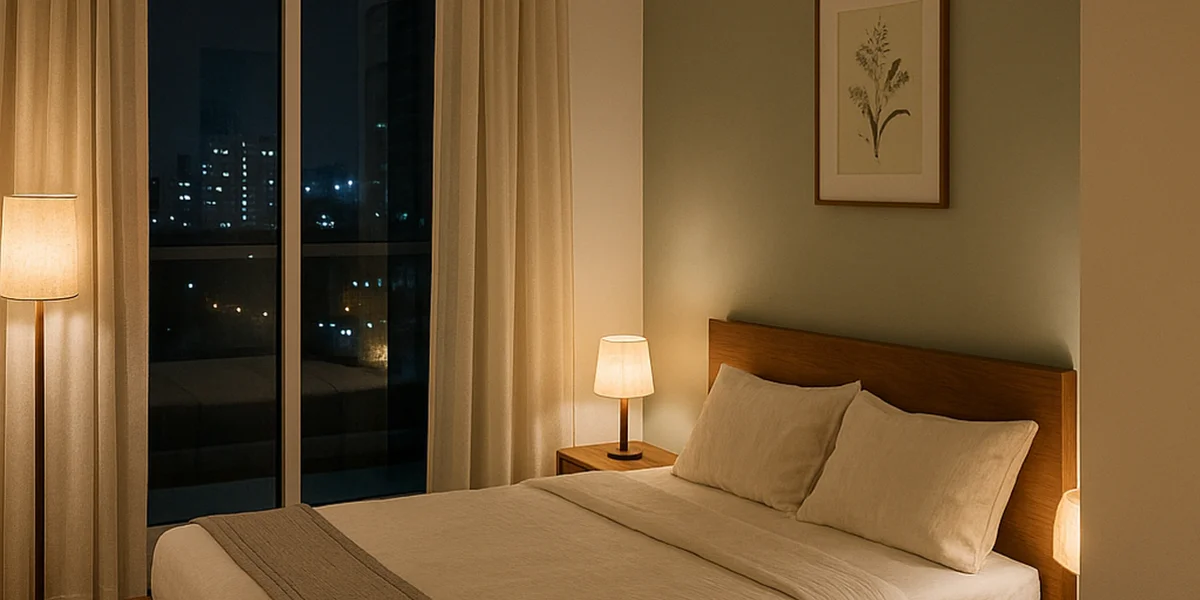
It is 10pm on a Thursday. You come in from the living room, flick on the bedroom light, and something in the air changes. The day does not end. It follows you in.
Most first-home bedrooms do this. The ceiling light is too bright. The curtains are too thin. There is a pile of books on the bedside table and a charger trailing across the floor. Nothing is wrong, exactly. It just does not feel like a place where you stop.
A calming bedroom at 10pm is not a luxury. In a first Hyderabad home it is a stack of small decisions made well.
The Palette Drops by Two Notches
The living room can be warm and active. Cream walls, terracotta cushions, a patterned rug. The bedroom should step down.
Paint the walls in a muted off-white, a very pale sage, or a soft clay. Keep the ceiling the same tone as the walls, not a brighter white. The eye needs one continuous surface, not a contrast line above you. Bedding should stay in the same family. White cotton, unbleached linen, or a soft ochre. Avoid the bold geometric prints that look good in a catalogue and loud at night.
One accent is enough. A single terracotta throw. A sage bedside table. One detail carries more weight than three.
Curtains Need Weight
Thin cotton curtains are the single most common reason a bedroom feels unsettled. Light leaks in from the balcony at 11pm. Morning sun hits the pillow at 6am. Street noise from the colony road travels straight through.
Layer them. A sheer inner curtain for daytime privacy, and a heavier outer curtain in cotton canvas, linen, or a blackout weave. The weight of a heavier curtain changes how the room sounds. It absorbs the edge off traffic, voices, and the air conditioner hum. You will feel the difference in the first week.
Hang them from the ceiling, not the window frame. Floor-length panels pooling slightly on the floor read softer than half-hung rods.
Move the Light Down
The overhead light is for cleaning the room, not living in it. A bedroom should have at least two light sources below shoulder height.
A floor lamp in one corner. A bedside lamp with a fabric or rice-paper shade. Both on warm bulbs, 2700K or lower. Keep the overhead on a dimmer, or stop using it after dinner. When light sits low, the ceiling recedes and the room feels enclosed. This single change does more for the 10pm feeling than any paint colour.
If there is room, add a small candle or a salt lamp on the dresser. Not for the glow alone, for the ritual of switching something on that signals the day is over.
A Textile You Can Touch
Beds look calm in photographs when they have layers. The flat sheet, the duvet, and then a cotton or wool throw folded at the foot.
The throw is the piece most first homes skip. It is also the piece that does the most work. A heavy handloom cotton throw in an off-white, a khadi weave in natural beige, or a small Pochampally ikat adds weight to the bed visually and physically. You reach for it in Hyderabad's cold January mornings. It gives the bed a finished feel even when the sheets are slightly rumpled.
Buy one that is heavier than it looks. The weight is the point.
One Quiet Detail
A bedroom does not need art. It needs one object that has a reason to be there.
A small brass urli on the dresser with a few jasmine flowers. A hand-thrown ceramic bowl holding rings and earrings. A piece of carved wood on the wall above the headboard, no larger than a dinner plate. A single framed photograph from a trip, not a print bought to fill a wall.
The object is the permission to stop scanning the room. The eye lands somewhere and stays.
What to Leave Out
Most bedrooms feel unsettled because too much is in them.
No charger wires trailing across the floor. Use a bedside box with a small hole for cables. No pile of books taller than the lamp base. Two at most. No clothes on the chair. The chair exists for sitting, not for the shirt you wore yesterday. No TV facing the bed. It becomes the first thing you look at in the morning.
Subtraction is the hardest part of a calming bedroom, and it is what separates a room that photographs well from one that feels well at 10pm.
Start With One Change This Week
You do not need to redesign the bedroom to change how it feels tonight.
Pick one. Hang heavier curtains. Move the bedside lamp to the floor and put a floor lamp in the corner. Add a single cotton throw to the foot of the bed. Clear the bedside of everything except the lamp, a glass of water, and one book.
Try it for a week. You will know by Thursday whether the bedroom has started to feel like the end of the day or still feels like an extension of it.
At Nilaya, we begin every bedroom the same way. The room tells you what it needs. You only have to listen.
Frequently Asked Questions
- How do I make my bedroom feel calm and restful?
- Subtraction does more than addition. Heavy curtains to block streetlight, warm low-level lamps instead of overhead lighting, one cotton or wool throw at the foot of the bed, a clear bedside with only a lamp and a glass of water, and one quiet object on the dresser. Most bedrooms feel unsettled because too much is in them.
- What lighting works best for a calming bedroom?
- Replace bright overhead light with two or three warm, low-level sources: a floor lamp in a corner, a small bedside lamp, and a wall sconce if the layout allows. Aim for 2700K bulbs or warmer. The goal is light that signals evening to your nervous system, not light that asks you to read fine print.
- Why does my bedroom feel cluttered even when it is clean?
- Cluttered usually means visually busy, not physically dirty. Trailing charger cables, a chair piled with yesterday's clothes, a stack of books taller than the lamp base, a TV facing the bed: each adds visual noise that the eye has to scan past. Hide cables, restrict the chair, keep two books by the bed, and remove the screen.
- What should I leave out of a bedroom?
- Anything that signals work or stimulation: a TV facing the bed, an exercise machine, a desk piled with paperwork, charging stations for multiple devices. Bedrooms work best as single-purpose rooms. The fewer functions a bedroom serves, the more reliably it signals rest.
- How important are curtains for bedroom sleep quality?
- More important than most homeowners realise. Light curtains let dawn and streetlight through, fragmenting sleep without you noticing. Heavy lined cotton or linen curtains, hung wider than the window and floor-length, block light, dampen street noise, and add the visual weight that makes a bedroom feel anchored and quiet.