Interior Design Styles for an Indian Home
A plain guide to the main interior design styles, from modern Indian to traditional and warm minimal, and how to find the one that fits your home and the way you live.
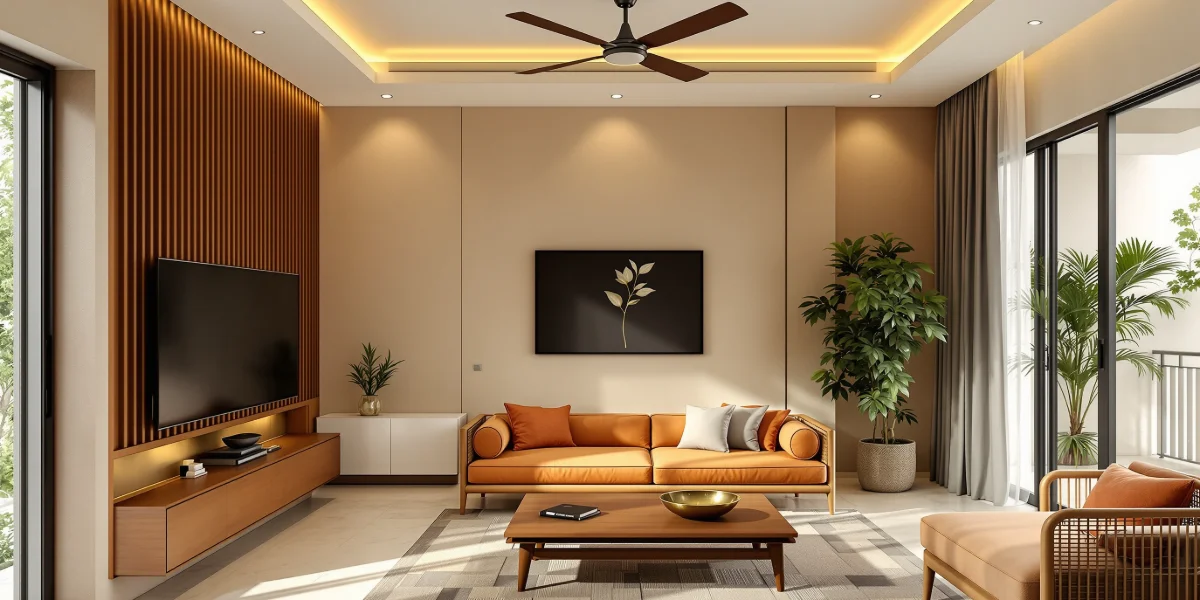
Walk through five finished homes in Hyderabad and you will feel the difference long before you can name it. One is calm and pared back. One is full of carved wood and colour. One sits somewhere in between, modern in its bones but warm with a few Indian pieces. That feeling has a name, and usually more than one, because it comes from a design style. Knowing the main ones makes the whole process of doing up a home far less confusing.
Most people who look up interior design styles are really asking a simpler question: which of these is me, and which one will suit my home? This is a plain guide to the styles you will actually meet in an Indian home, what each one feels like, who it tends to suit, and how to pick without getting lost in labels.
What Are the Main Interior Design Styles?
The main interior design styles for an Indian home are modern Indian, traditional Indian, transitional, and warm minimal, alongside global looks like Scandinavian, mid-century, bohemian and rustic. Each is simply a consistent set of choices about materials, colour, furniture and mood. Most real homes blend two of them rather than follow one to the letter.
Think of a style as a starting point, not a rulebook. It gives you a direction for the big decisions, the walls, the flooring, the key furniture, so the parts of the home agree with each other. From there, your own life fills in the rest. The sections below take the styles one at a time.
Modern Indian, the Everyday Favourite
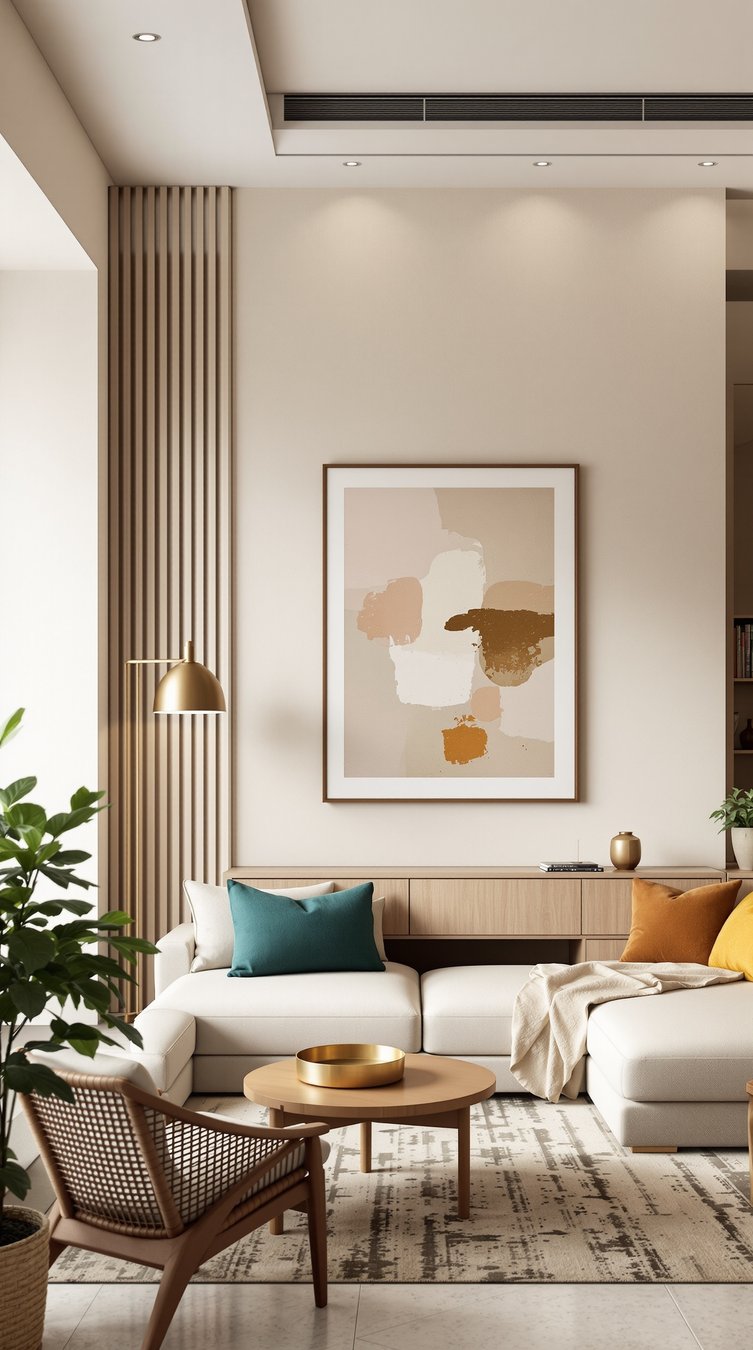
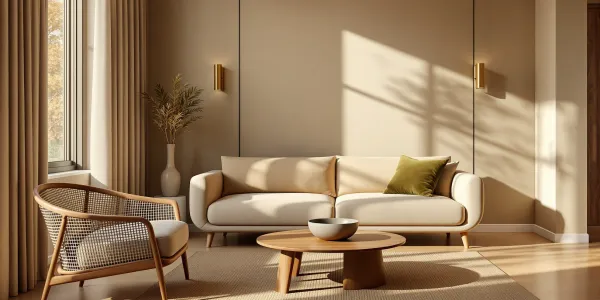
Modern Indian, sometimes called Indian contemporary, is the style most new flats in the city lean towards. It keeps the clean lines and clutter-free feel of modern design, straight-edged furniture, hidden storage, calm walls, then holds on to an Indian soul through the materials. Think warm teak, brass with a soft patina, cane, a handloom cushion or a wool dhurrie, and one considered piece of art.
The palette stays quiet and warm: oat, stone, clay, with a single deeper accent such as a rust sofa or a teal chair. It suits a young family in a Gachibowli or Kondapur flat who want a home that feels current and easy to keep, without it looking like a showroom that could be anywhere in the world. Modern Indian interior design is, at heart, restraint with roots.
Transitional is the honest middle ground, and for many Hyderabad flats it is the easiest style to live with.
Traditional Indian, Led by Craft

Traditional Indian style leads with craft and heritage. Here the room is layered on purpose: carved teak or rosewood, a jaali screen, brass lamps and an urli, handloom and ikat textiles, and art with a story to tell, a Tanjore painting or a Pichwai. The colours run warmer and richer, with jewel tones like deep green, oxblood and ochre earning their place against a neutral base.
This style rewards a home with a little more room and a love of detail, often a Banjara Hills or Jubilee Hills villa, or a flat where one family has gathered pieces over the years. Done with restraint, it never tips into heavy or busy. The trick is one strong craft moment per room, given space to breathe, rather than every surface competing at once.
Transitional, Where Modern Meets Traditional

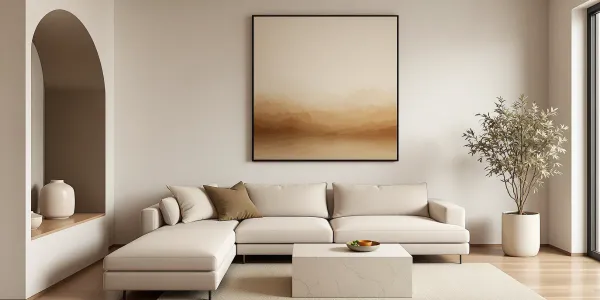
Transitional is the honest middle ground, and for many Hyderabad flats it is the easiest style to live with. It sets a calm, modern shell, simple walls, clean-lined sofas, a neutral palette, and then lets one or two traditional Indian pieces do the talking: a carved console, an antique brass lamp, a handwoven rug, a single heritage artwork.
The appeal is balance. You get the light, uncluttered feel of modern design and the warmth and character of traditional craft, without committing fully to either. It also ages gently, because the modern base stays quiet while the heritage pieces carry the personality. If you cannot decide between modern and traditional, you probably want transitional.
Warm Minimal, Quiet and Pared Back

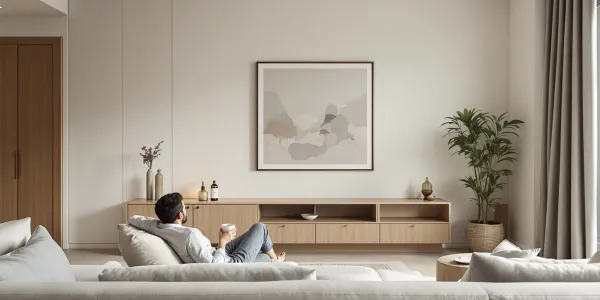
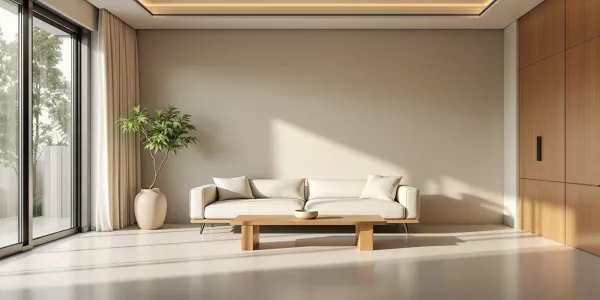
Warm minimal takes the calm of minimalism but adds warmth so a home never feels cold or empty. Walls are lime-plastered or softly textured, furniture is low and made of pale or honeyed wood, and natural materials do the work: cane, jute, linen, a single stone surface. There is little on show, but what is there is chosen with care.
It borrows a little from Japandi, the calm meeting point of Japanese and Scandinavian design, but in an Indian home it reads best with Indian materials, a teak bench, a khadi throw, a quiet piece of hand-thrown pottery. This style suits people who find peace in open space and want the light and the materials, rather than the objects, to be the story. Restraint here means fewer things, each one considered, not bare walls.
The Global Styles You Will Hear Named

A few global styles come up often, and it helps to know them even if you only borrow a note or two. Scandinavian design is light and functional, with pale wood, soft neutrals and plenty of daylight. Mid-century modern brings warm wood, tapered legs and clean retro shapes. Bohemian is layered and personal, full of pattern, plants and collected pieces. Rustic leans on raw wood, stone and a lived-in, earthy feel.
In an Indian home, these rarely stand alone. A Scandinavian lightness pairs beautifully with Indian craft; a mid-century chair sits happily beside a brass lamp. Used with a quiet, considered hand, each of these adds a note to a home that is still rooted in where it is. The label matters far less than whether the mix feels calm and deliberate.
How to Choose a Style for Your Home

Start with how you actually live, not with a picture you saved. A home with young children and an open kitchen wants durable, easy surfaces and rounded pieces. A couple who love to host might give more to the living and dining rooms. Be honest about clutter, pets, and the way mornings and evenings run in your home.
Then read the home itself. Note which way the main rooms face and how much daylight they get, because a style that glows in bright light can feel flat in a darker room. Look at the fixed things you are keeping, the flooring, the doors, the window frames, and choose a style that works with them rather than against them. Favour materials that age well in Hyderabad, teak, stone, brass, handloom, so the home looks better in five years, not tired.
Most of all, give yourself permission to blend. The best homes are rarely one pure style. They pick a calm base, add a few pieces that mean something, and hold it all to one quiet standard. If you want help finding that balance, that is exactly the conversation a designer is there to have.
Sources & References
- Interior design styles: An overview of major interior design movements and their defining features. Interior design, Wikipedia.
- Modernism in design: The origins of modern design and its function-led, clean-lined principles. Modern architecture, Wikipedia.
- Japandi: The hybrid aesthetic combining Japanese and Scandinavian design, referenced under warm minimal. Scandinavian design, Wikipedia.
Frequently Asked Questions
- How many interior design styles are there?
- There is no fixed number, but for an Indian home a handful cover most of it: modern Indian, traditional Indian, transitional and warm minimal, plus global looks such as Scandinavian, mid-century, bohemian and rustic. Knowing these few is more useful than memorising a long list.
- What is the difference between modern and contemporary?
- Modern refers to a specific clean-lined, function-first look that took shape in the early twentieth century. Contemporary simply means what is current now, so it shifts over time. In everyday use in India the two are often treated as one, which is why the style is usually called modern Indian or Indian contemporary.
- Can I mix two interior design styles?
- Yes, and most good homes do. The simple way is to pick one dominant style and let a second play a supporting role, held together by a common thread such as one wood tone or one palette. That is exactly what transitional and warm minimal already are.
- Which interior design style is best for a small Hyderabad flat?
- Modern Indian, transitional or warm minimal all suit a compact flat well, because they keep the room calm and uncluttered and let light move through. Save the heavier, more layered traditional look for homes with a little more space.
- Do I have to choose a style before I meet a designer?
- No. It helps to know roughly what you are drawn to, but a good designer reads your home and the way you live first, then suggests a direction. Coming in curious rather than committed usually leads to a better fit.