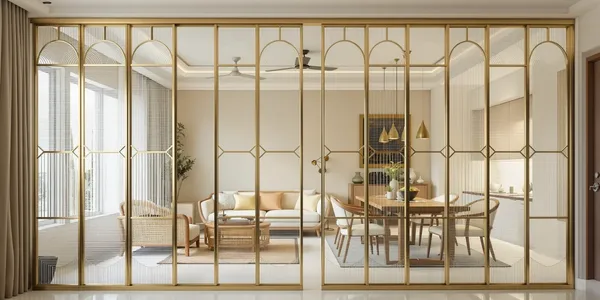
The Craftsperson Behind the Jali: How Traditional Indian Screens Work in Modern Hyderabad Interiors
A carved jali screen is not decoration. It controls light, separates space, and carries centuries of craft. Here is how Nilaya sources and places them in contemporary Hyderabad homes.
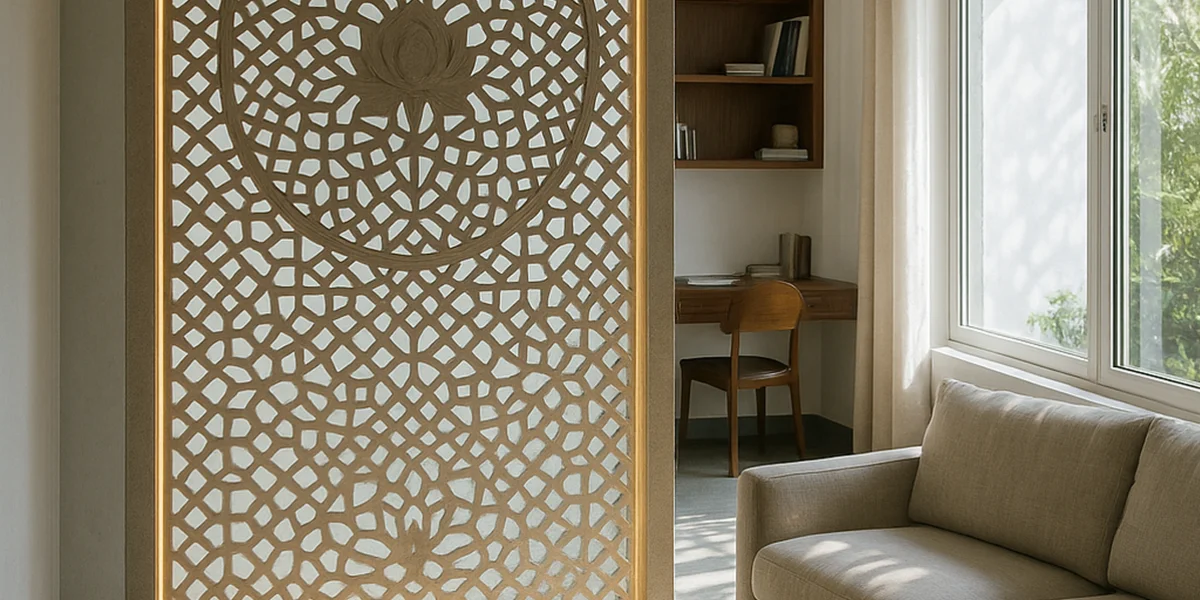
The first time a client asks about a jali screen (also spelt jaali), they usually point to a photograph. A warm pool of light falling through carved stone onto a floor. A bedroom that feels both open and private. A living room corner where a panel stands like a punctuation mark. What they rarely see in that photograph is the months of craft that precede it, or the decisions that determine whether a jali actually works in a space rather than just looking good in one image.
What a Jali Is, and What It Actually Does
Jali is the Urdu and Hindi word for a perforated screen or lattice, traditionally carved from sandstone, marble, or wood. The form appears across Mughal architecture, Rajasthani havelis, and South Indian temple corridors. In these contexts, jali served a precise functional brief: filter intense sunlight into a room while allowing ventilation, and create visual privacy without full enclosure. Every hole in a jali screen has a reason. The pattern is not arbitrary. It is a negotiation between light, air, and the human eye.
In a contemporary Hyderabad apartment or villa, a jali screen does not carry the same structural or climate function it carried in a 17th-century haveli. What it carries instead is spatial intelligence. A well-placed jali panel separates a dining area from a living zone without building a wall. A backlit jali screen at the end of a corridor tells visitors the space continues without asking them to walk further. A jali screen in a bedroom creates the effect of dappled light moving across a floor as the afternoon progresses. These are functional roles, not decorative ones.
The Craft Behind a Stone Jali Panel
Stone jali carving is manual work done with chisels, rotary tools, and a level of patience that no CNC machine fully replicates. A skilled craftsperson in Rajasthan, typically from the Makrana region known for its white marble and pink sandstone, works from a paper pattern laid over the stone. The pattern is transferred with a punch, and the negative spaces are drilled and chiselled from both faces to achieve a clean edge on each side.
A standard 4x2 foot stone jali panel from a quality workshop in Jaipur or Jodhpur takes two to four days of hand-carving. A more complex geometric or floral jali design that fills the entire field can take a week. The distinction between workshop-grade and master-grade jali is visible in the cut edges: cheap work leaves ragged transitions between positive and negative space; fine work leaves a crisp line from any angle. According to the Craft Documentation Programme at the National Institute of Design, interlocking geometric jali patterns in Makrana marble represent one of the most technically demanding forms of stone craft still practised in India today.
Wood jali follows a similar process but uses teak, sheesham, or mango wood depending on the application. Teak is the default for Nilaya projects because its natural oils resist moisture, which matters in Hyderabad's monsoon humidity. A carved wood jali panel has more warmth than stone but less translucency: the light it filters is diffused rather than projected.
How Jali Screens Work in a Contemporary Hyderabad Interior
The most common mistake with jali screens is treating them as wall art: a single panel hung at eye level, lit from the front, surrounded by empty wall. This reduces a spatial tool to a framed object. The more interesting applications use the jali's actual property, which is the relationship between the screen and what lies behind or beyond it.
In a 900 sq ft apartment in Kondapur, a teak jali panel placed between the living area and a compact study creates two zones with one gesture. The study is not hidden (the resident can see through the jali from the living area), but it is visually contained. The boundary reads as intentional rather than arbitrary. When the study lamp is on in the evening, the jali pattern is backlit and becomes the living room's most considered piece of visual texture.
In a villa in Jubilee Hills with a long internal corridor, a stone jali set into a niche at the corridor's end stops the eye without stopping the light. The wall behind the jali is painted in a warm terracotta: the filtered light landing on the floor carries that warmth into the corridor without needing a second lamp. Both of these applications are spatial decisions, not decorative ones.
Sourcing: Rajasthan vs Local Hyderabad Workshops
The honest answer is that fine stone jali screen carving does not exist in Hyderabad's local carpentry market. The craft is concentrated in Rajasthan, particularly in the workshops around Jaipur, Jodhpur, and the Makrana marble belt. Sourcing directly from Rajasthan, either through an established supplier relationship or by visiting workshops, is the only route to quality stone jali at reasonable cost. The markup added by resellers in Hyderabad's decor markets is significant without adding any quality improvement.
Wood jali is more accessible locally. Hyderabad and its surroundings have competent woodworking workshops that can execute a carved panel to a supplied jali design. The caveat is precision: Hyderabad workshops are skilled at joinery and furniture construction, but geometric jali carving requires a different skill set and more time. A good local wood jali project needs a clear paper pattern, a sample piece approved before full production, and enough lead time for the craftsperson to work without rushing.
The sourcing process matters to Nilaya because craft quality and provenance are part of what a client purchases when they invest in a hand-carved element. A CNC-cut MDF jali with a foil finish costs a tenth of a Makrana marble panel and photographs identically from four feet away. It does not age identically. It does not carry the same material intelligence. The Nilaya position is to use hand-carved stone or wood and to make the sourcing visible, rather than substitute a cheaper alternative without disclosure.
Practical Decisions: Sizing, Mounting, and Lighting
Sizing a jali screen design for a space requires a physical sample before any commitment. Stone jali panels are heavy (a 4x2 foot, 25mm marble panel weighs approximately 45 kg) and require structural support: wall-mounted with anchor bolts or seated in a purpose-built frame. Freestanding jali screens in a lighter sandstone or teak are more flexible and can be repositioned. A freestanding panel needs a base that accounts for the screen's centre of gravity or a wall-attachment point at the top third.
Lighting is the variable that most dramatically changes a jali's presence in a space. Frontlit jali reads as a decorative object. Backlit jali creates projected pattern on the opposite wall or floor, which shifts the screen from object to spatial experience. The Nilaya approach is to plan the light source behind the jali as part of the original layout rather than adding it later: a recessed strip at 2,700K placed 200-300mm behind the panel in the frame cavity, on a dimmer, gives full control over the intensity of the projection without adding visible hardware.
Frequently Asked Questions
- How much does a quality hand-carved stone jali panel cost?
- A 4x2 foot Makrana marble panel with a geometric pattern from a quality Jaipur workshop typically runs between Rs 18,000-45,000 depending on pattern complexity, stone grade, and edge finish. A carved sandstone panel in the same size is Rs 8,000-18,000. Shipping from Rajasthan and installation adds Rs 5,000-12,000 depending on weight and mounting requirements.
- Can I use a jali panel in a bathroom or kitchen?
- Stone jali in a bathroom is possible if the panel is sealed and the wall behind it is properly waterproofed. Wood jali in a bathroom is not recommended; even teak will move with sustained moisture exposure. In a kitchen, the soot and grease load makes jali impractical as a permanent panel unless it is placed in a low-exposure zone like the entry wall.
- How do I clean a stone jali?
- A soft brush and compressed air for routine maintenance. A dilute stone cleaner with a soft brush for periodic deep cleaning. Never high-pressure water, which forces water into the carved cavities and can cause staining or surface erosion over time. Sealing the stone with a penetrating stone sealer before installation is the first line of maintenance protection.
- What is the lead time for a custom jali order from Rajasthan?
- Standard patterns available in workshop stock can ship within 10-14 days. Custom patterns, where a design is specified and a new paper template is made, take 6-8 weeks from design approval to delivery in Hyderabad. Building this lead time into a renovation schedule is essential.
- Can a jali be used as a room divider without attaching it to a wall?
- Yes, for wood or lighter sandstone panels. A freestanding wood jali frame with a weighted base works well as a room divider in living spaces. The frame needs to be engineered for stability, particularly if children are present. Stone panels above 30 kg should always be structurally fixed.