What Is Quiet Luxury, and Why It Works in Indian Homes
Quiet luxury in interior design values craft over spectacle and intention over trend. Discover why this philosophy resonates deeply with Indian homeowners.

Close your eyes for a second. Picture the most beautiful room you have ever walked into. Not from a magazine. From your actual life. Maybe it was your nani's living room in the old part of town, where the afternoon light hit the mosaic floor just right. Maybe it was a friend's flat in Jubilee Hills where you sank into a sofa and forgot to leave for three hours.
Now think about what made that room stay with you. It probably wasn't the brand name or the price tag. It was the feeling. That is quiet luxury interior design. And it might be the most important idea in Indian interior design right now.
Understanding Quiet Luxury in Design
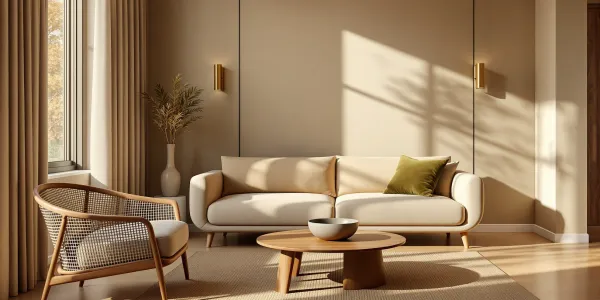
Quiet luxury interior design is a way of thinking about your home, not a trend you can buy off a shelf.
Most luxury interiors operate on a simple principle: make it visible. Italian marble in the foyer so guests notice immediately. A chandelier scaled for a banquet hall hanging above your dining table for six. Brand logos on fixtures. Gold where brass would do. The goal is recognition. You walk in and you are supposed to know this home cost a lot of money.
Quiet luxury flips that completely. It asks a different question. Not "will people be impressed?" but "will the person who lives here feel at peace?"
A quietly luxurious home might use Kadapa stone on the floors because it stays cool through a Hyderabad May and develops a beautiful patina over the years. The kitchen counter might be honed granite from Rajasthan rather than polished imported marble, because honed stone hides the scratches of actual cooking and ages gracefully. The curtains might be handwoven khadi from Pochampally, heavy enough to soften the western sun but light enough to let the breeze through during the few weeks you can keep the windows open.
None of these choices scream. All of them work beautifully, quietly, every single day.
Quiet luxury interior design is not a trend you can buy off a shelf.
Why Quiet Luxury Resonates with Indian Homeowners
Here is something funny. When people talk about quiet luxury like it is a new Western import, they are forgetting that Indian homes invented this centuries ago.
Think about the traditional Hyderabadi haveli. The exterior is often plain, sometimes almost austere. Step inside and you find carved jali screens filtering light into patterns on the floor. Lime-plastered walls that breathe and stay cool without air conditioning. Courtyards open to the sky where the family gathers every evening. Nothing is done for show. Everything is done for living.
Or think smaller. Your grandmother's brass urli sitting by the entrance, filled with floating jasmine. That urli was not purchased from a luxury home decor store. Someone in the family probably bought it decades ago from a craftsman in the old city. It has dents. It has darkened in places. And it is more beautiful than anything you could order online today.
That is the DNA of quiet luxury in India. Objects chosen once, chosen well, and allowed to become part of the family story.
So what went wrong? Honestly, speed. The construction boom of the last fifteen years brought modular kitchens, laminate everything, and interiors you can install in three weeks flat. Walk through the model flats in Gachibowli or Kondapur and you will see the same grey-and-white kitchen in every single one. The same TV unit. The same "Italian marble look" vitrified tiles. These spaces photograph well for a listing. But six months after you move in, the veneer edges start peeling. The handles loosen. And the whole flat feels like it belongs to someone else, because it was never designed for you in the first place.
Quiet luxury is the antidote. Not necessarily more expensive (sometimes it actually costs less, because you buy fewer things), but infinitely more thoughtful.
Five Principles of Quiet Luxury in Practice
If you are nodding along and wondering how to actually bring this into your own home, here is what it looks like in practice.
Intention over impulse. Before you buy a single piece of furniture, sit in the empty room. At different times of day. Watch where the light falls at 7 AM versus 4 PM. Notice where you naturally want to sit. A quietly luxurious home does not start with a shopping list. It starts with paying attention. That reading nook you place by the east-facing window because the morning light there is extraordinary? That is intention. The matching console table you bought because the store had a sale? That is impulse. You can feel the difference.
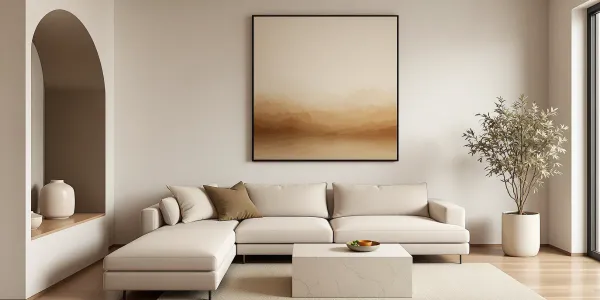
Texture over pattern. Walk into most furniture showrooms in Hyderabad and you will see bold printed upholstery, busy wallpapers, statement tiles. Quiet luxury goes the other way entirely. Richness comes from layering textures. A raw linen sofa next to a polished rosewood side table. A woven cane chair beside a smooth plaster wall. A hand-knotted wool rug on cool stone floors. Your eye does not land on any one thing. Instead, the whole room feels deep, warm, and alive. This is surprisingly practical too, because textures hide wear far better than prints do.
Craft over brand. There is a ceramic artist in Khanamet who makes bowls with a slight wobble to them, each one unique, each one holding the memory of being shaped by hand. A set of those bowls on your dining table tells a story that no branded dinnerware from a department store ever could. This is what separates luxury home interiors that last from ones that simply impress. Quiet luxury is pro-maker rather than anti-luxury: it asks who made this and how, not which brand it is.
Warmth over perfection. A scuff on a wooden floor reads as evidence of life, not damage. Quiet luxury borrows from the Japanese idea of wabi-sabi, the notion that imperfection is not something to fix but something to honour. A perfectly styled room looks like a set. A lived-in room, where the books are a little messy and the cushions are dented from last night's movie marathon, looks like home. Design for that.
Restraint over spectacle. Some of the most powerful design decisions are invisible to anyone who is not paying attention. A ceiling height of 10 feet instead of 9 that makes the room feel effortlessly spacious. A doorway aligned with a window so you catch a glimpse of green from the hallway. A wall colour that shifts from warm cream to pale gold as the sun moves. These are the choices that separate a good home from one that genuinely moves you. And not a single guest will ever point at them and say "nice ceiling height." They will just feel it.
Designing Your Home with Intention
Here is the honest truth about quiet luxury. It is harder than regular luxury. It is easier to pick the most expensive marble and the biggest chandelier and call it done. Restraint takes longer. Sourcing the right Athangudi tiles from Tamil Nadu, finding a carpenter who can work with reclaimed teak, choosing a wall colour from sixty nearly identical shades of off-white because the right one matters. This is the patience bespoke interiors in India are built on. It takes someone who cares enough to get it right.
But when it comes together, something shifts. Your home stops performing and starts breathing. You walk in after a long day and the space actually holds you. Your family gathers in the living room not because it is impressive but because it is comfortable. The morning chai tastes better by the window you positioned for exactly this purpose.
That is what we mean by unmistakably yours. A home that could not belong to anyone else, because it was shaped around the way you actually live.
If any of this resonates, we would love to hear what home means to you.
Frequently Asked Questions
- What is quiet luxury in interior design?
- Quiet luxury values craft over spectacle and intention over trend. It uses materials that age well: Kadapa stone, honed granite, handwoven khadi, and brass that develops a patina with time.
- Why does quiet luxury work in Indian homes?
- Indian homes have practiced restrained luxury for centuries: havelis with plain exteriors and carved jali interiors, lime-plastered walls, brass urlis chosen once and kept for decades. Quiet luxury is a return to that tradition, not an import.
- How is quiet luxury different from minimalism?
- Minimalism removes; quiet luxury chooses. A quiet luxury room may be full, but every object is made well, has a story, and is expected to last. Minimalism prioritizes empty space; quiet luxury prioritizes meaningful presence.
- What are the key principles of quiet luxury in practice?
- Five principles: choose materials that age well, prioritize craft over branding, layer textures over patterns, source locally and seasonally, and keep colour palettes calm and tonal rather than contrasting.
- Can I design a quiet luxury home on a budget?
- Yes. Quiet luxury is about intention, not expense. A handmade Athangudi tile floor costs less than imported marble. Linen curtains made by a local tailor outperform polyester drapes. The discipline is in choosing fewer, better things, not in spending more.